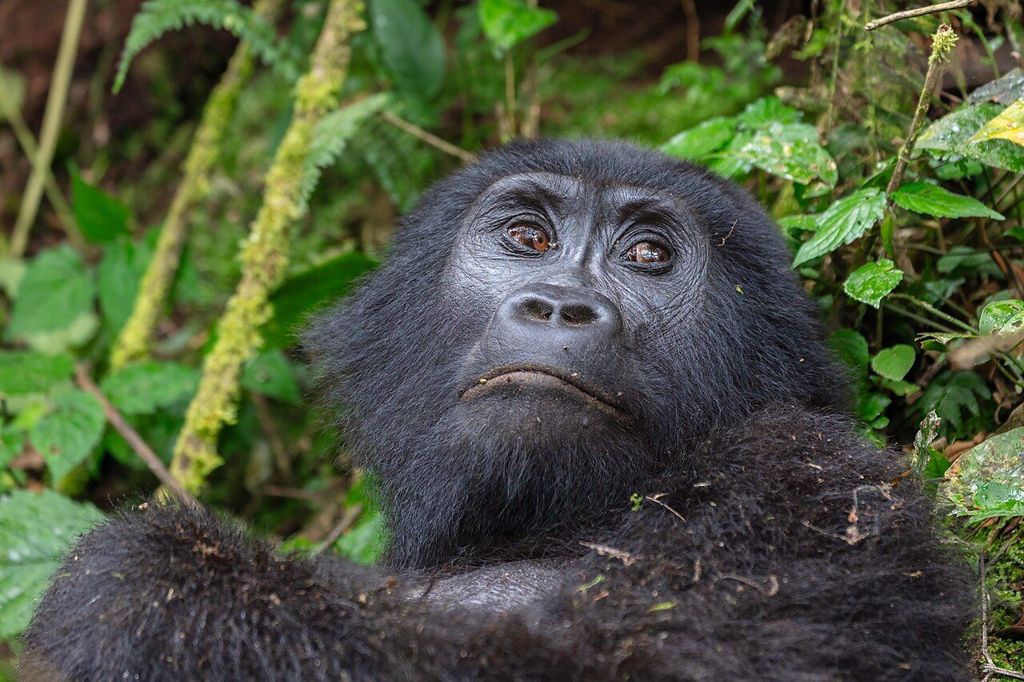
An hour with a gorilla family in the forests of Bwindi or the Virunga volcanoes is strictly limited, carefully managed and, for most people who do it, one of the most moving hours of their lives.
Mountain gorillas live in only two areas on Earth. One is the Virunga volcanoes, a chain of mountains shared by Rwanda, Uganda and the Democratic Republic of the Congo. The other is the Bwindi Impenetrable forest in south-western Uganda. Their total numbers are small, a little over a thousand animals, and they have recovered from far lower levels thanks to decades of protection, research and careful, tightly controlled tourism.
Visiting them is not a casual outing. Permits are limited and need to be secured well ahead, the hike can be steep and long, and the rules exist to protect animals that are vulnerable to human illness. Go in with that understanding and the experience is extraordinary.
Bwindi and Volcanoes
In Uganda, most gorilla trekking happens in Bwindi Impenetrable National Park, a large tract of ancient, steep, densely forested hills. The park is divided into several sectors, each with its own habituated gorilla families and starting points, and the sectors are far apart by road. Uganda also has a habituated family in Mgahinga Gorilla National Park, on the slopes of the Virungas.
In Rwanda, trekking takes place in Volcanoes National Park, on the forested flanks of the volcanoes in the north-west of the country, a few hours' drive from Kigali. The terrain is higher and more open in places, with bamboo forest on the lower slopes. The two experiences are similar in essentials; the differences lie in access, terrain and the cost of permits, which in Rwanda is considerably higher than in Uganda.
Permits and group rules
Every visitor needs a permit for a particular day and park, issued by the national wildlife authority: the Uganda Wildlife Authority or the Rwanda Development Board. Numbers are capped, with a small group of visitors assigned to each habituated family each day, and permits for busy months can run out long in advance. Prices, age limits and rules are reviewed from time to time.
On the day, you report early to the park headquarters for a briefing, then set off with rangers and trackers. Once your group reaches the gorillas, you stay with them for about an hour, then leave. Minimum age limits apply, typically in the mid-teens.
Another wild place: Lemurs in Madagascar's rainforests
The trek and your fitness
Nobody can tell you in advance how long the walk will be. Gorillas move every day, and trackers set out ahead to find them. Some groups reach their family within an hour; others walk for much of the day through thick vegetation, up and down steep, muddy slopes, at altitude. In Bwindi, the hills are relentless; in the Virungas, you may be above 2,500 metres, where the air is thinner.
A reasonable level of fitness makes the day far more enjoyable. Walking poles help, and you can hire a porter at the start to carry your bag and give you a hand on difficult sections. Many porters come from communities around the parks, and hiring one is a direct way to spread the benefits of tourism. Tell the rangers honestly about any health issues; they assign groups partly by expected difficulty.
Distance and health rules
Gorillas share most of our DNA, and that makes them vulnerable to human diseases, from colds to more serious infections. A cough that is a nuisance to you could be dangerous to a young gorilla. For that reason, the rules about distance and health are strict, and you should follow them without exception.
- Do not trek if you are ill. Tell the park staff, who can usually arrange an alternative.
- Keep the minimum distance the rangers set, usually several metres, even if a gorilla moves closer to you; step back quietly if you can.
- Wear a face mask when required; masks are now commonly used near gorillas.
- Never touch, feed or call to the gorillas.
- Do not eat, drink or relieve yourself near them, and leave no rubbish in the forest.
- Turn away and cover your mouth if you have to cough or sneeze.
- Use no flash, and keep your voice low.
If a gorilla charges or displays, the rangers will tell you what to do. Usually that means staying still, crouching, avoiding eye contact and letting the moment pass.
What the hour is like
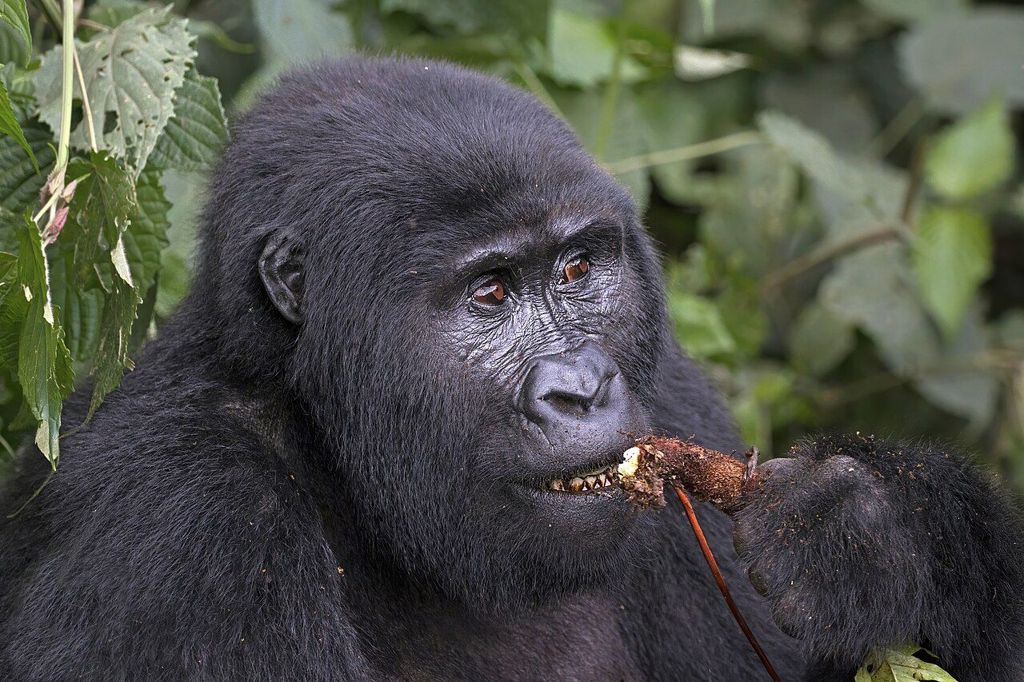
The gorillas are habituated, which means they have been patiently accustomed to the presence of people over years, but they are not tame. You may find the family feeding, resting in a clearing or moving through dense undergrowth. Young gorillas play and tumble; adults strip leaves and stems, pull up roots and groom one another. The silverback, the dominant adult male, is calm but unmistakably in charge.
Photography is allowed, without flash. It is worth putting the camera down for part of the hour simply to watch.
Seasons and kit
Trekking runs all year. The drier months, roughly June to September and December to February, make paths less slippery, but rain can fall at any time in these mountain forests. Bring a good rain jacket, waterproof boots with strong grip, long trousers and long sleeves against nettles and thorns, and gardening gloves for grabbing vegetation. Tuck your trousers into your socks against ants.
If gorillas leave you wanting more of the world's great primates, the note on lemurs in Madagascar covers a very different forest. For a contrast at sea, see grey whales in Baja California.
Planning notes
- When: June to September, December-February
- Getting there: Fly to Entebbe or Kigali, then drive
- Bring: Rain jacket, gloves, long sleeves, boots, face mask