Each winter, grey whales travel from Arctic feeding grounds to warm, shallow lagoons on the Pacific coast of Baja California to give birth. Small boats let you watch mothers and calves at close range.
Grey whales make one of the longest migrations of any mammal. They spend the summer feeding in the cold, rich waters of the Arctic and subarctic, then swim south along the Pacific coast of North America to the lagoons of Baja California, in Mexico. There, in sheltered, shallow water, females give birth and nurse their calves before the long journey north in spring.
The lagoons have become one of the world's best-known places for watching whales. The whales here are often curious about the small boats that carry visitors, and some approach closely. That makes the rules all the more important.
Grey whales were hunted close to extinction in the 19th and early 20th centuries, partly in these very lagoons, where whalers found mothers and calves easy targets. Protection allowed the eastern Pacific population to recover, and today the lagoons are managed for the whales and for the local communities who guide visitors to them.
The lagoons
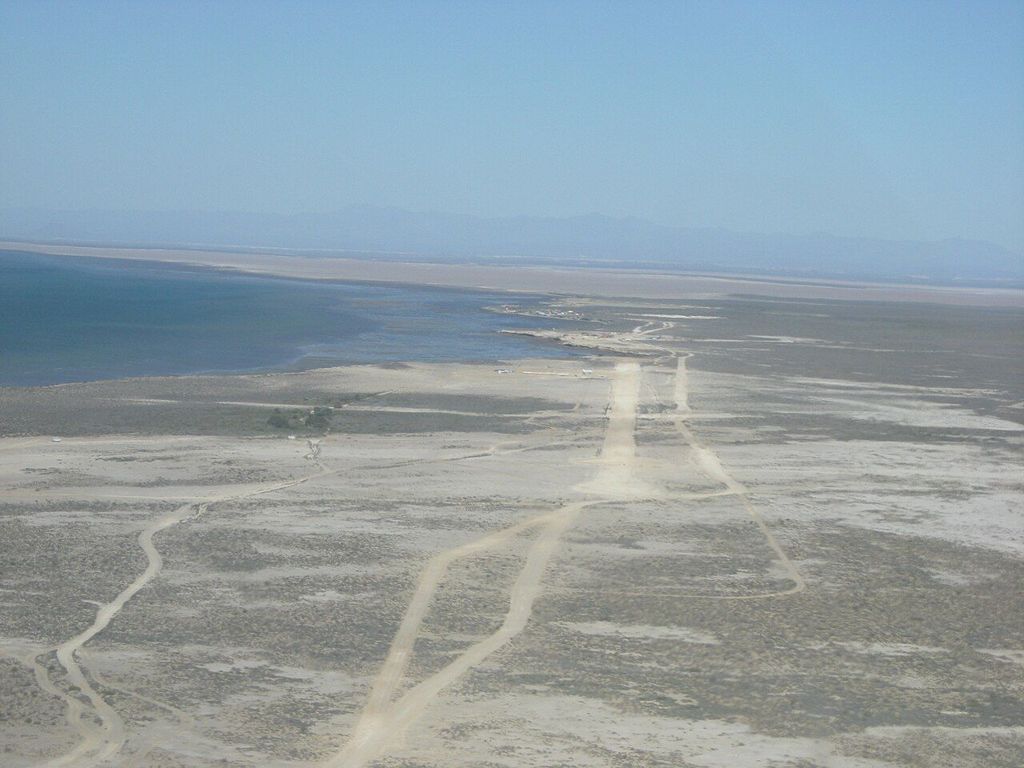
Two of the main breeding lagoons lie halfway down the peninsula on its Pacific side. Ojo de Liebre, near the town of Guerrero Negro, is the largest and holds great numbers of whales in a good season. Laguna San Ignacio, further south and more remote, is smaller and quieter, reached by a long drive on rough roads or by light aircraft. Both lie within the El Vizcaino Biosphere Reserve, and the whale sanctuary there is a UNESCO World Heritage Site.
Grey whales are mottled grey with pale patches of barnacles and whale lice on their skin, and they have no dorsal fin, only a low hump and a row of knuckles along the back. Adults can reach the length of a city bus. Watching from a small boat, you notice details that a distant blow never shows: the double plume of breath, the scarred head, the slow roll of the back before a dive.
A third area, Magdalena Bay, lies further south and is reached from small towns on its shores. All three are flat, open places of desert, mangroves and wide water, with few facilities and a strong sense of distance from the rest of the world.
The calving season
Whales start arriving in the lagoons around December, and numbers build through January. Births take place in the shallow water, and the weeks that follow are a time of nursing, resting and teaching calves to swim against tidal currents. By late February and March, many mothers and calves are present, and calves are active and playful.
From March into April, the whales gradually leave for the north. The best time for mothers and calves is usually from mid-February through March, though timing shifts a little from year to year.
Another wild place: Whale sharks at Ningaloo Reef
Small boats
Whale watching in the lagoons is done from pangas, small open fishing boats with outboard engines, run by local people with permits. Trips last a set time, and only a limited number of boats may be in the watching area at once. The boats drift or move slowly, and the whales decide how close they come.
Sometimes a whale surfaces right beside the boat, spouts, rolls and looks at you. Mothers sometimes bring calves alongside. These encounters have made the lagoons famous, and they are a reminder of how much depends on the boats behaving well.
Other days are quieter, with whales spouting and surfacing at a distance and the boat drifting in the wind. Those days are part of the experience too. Watching how mothers and calves breathe, rest and move together is fascinating even from fifty metres away.
Rules that protect the whales
Mexican federal rules govern whale watching in the lagoons: how many boats, how long, how close, and in which zones. Local communities and authorities enforce them. As a visitor, your part is simple.
- Go only with a permitted local boat.
- Stay seated and follow the boat driver's instructions.
- Do not reach out to touch whales or splash the water to attract them; let them choose how close to come.
- Keep your voice down, and do not throw anything into the water.
- Never swim with the whales; it is not allowed.
Some visitors are tempted to touch a whale that comes alongside. Holding back is the welfare-first choice, and it costs you nothing of the experience.
What the landscape is like
The lagoons lie in desert. Around them, flat salt pans, scrub and dunes stretch away to distant mountains. Winds can be strong, especially in the afternoons, and mornings can be cold. Water spray soaks the boats, so cameras need protection. Birdlife is rich, with ospreys, pelicans, herons and many waders. Bring binoculars for the birds as well as the whales, since many feed along the mangrove edges and mudflats.
Accommodation near the lagoons is simple, in small towns or basic camps. Distances in Baja are long, fuel stops are spaced out, and night driving is best avoided because of livestock and poor road conditions.
Phone signal is limited around the lagoons, and cash may be needed in small towns where card machines are unreliable. Pack layers for cold mornings and windy afternoons, and keep sunscreen handy, because the glare off the water is strong even when the air feels cool.
A note on the photographs
The whale photographs in this note were taken near Puerto Adolfo Lopez Mateos, on Magdalena Bay, rather than in the two lagoons named above. The behaviour and the scene are the same across these Baja breeding areas. The aerial view shows the shore and airstrip at Laguna San Ignacio.
Grey whales are one of several great journeys in this collection. For animals watched from a ship at the other end of the planet, see polar bears in Svalbard. For another large, gentle filter feeder, see whale sharks at Ningaloo Reef.
Planning notes
- When: January to April
- Getting there: Fly to Baja, then drive to the lagoons
- Bring: Windproof jacket, sun hat, waterproof bag, sunglasses