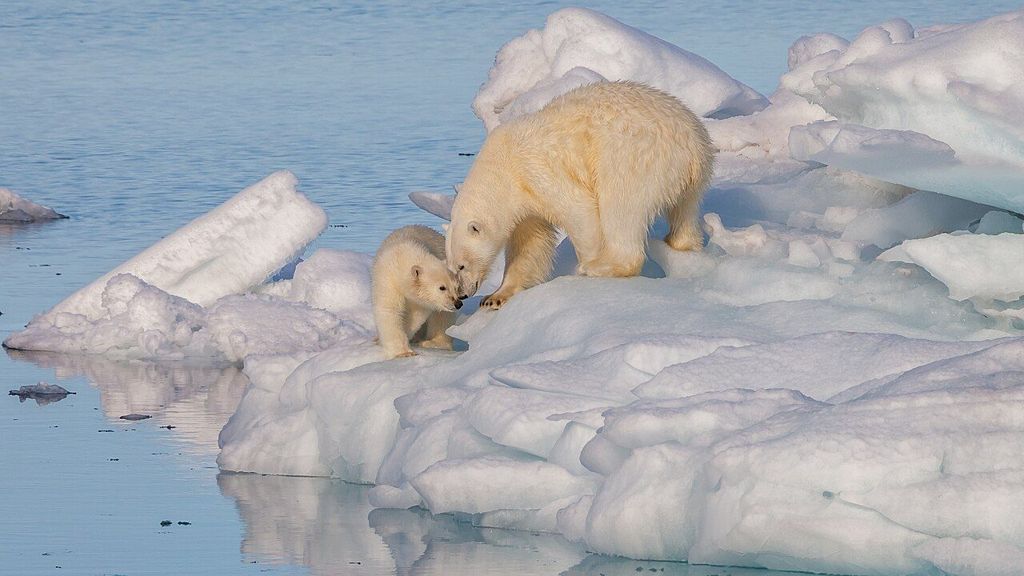
High in the Norwegian Arctic, bears hunt seals along the edge of the sea ice. Seeing one from a ship, at a careful distance, is the reward for long days of searching.
Svalbard is a Norwegian archipelago far north of the mainland, roughly halfway between Norway and the North Pole. Its islands are mountainous and heavily glaciated, and in winter much of the sea around them freezes. Polar bears live here and on the drifting sea ice, hunting seals and moving over great distances. They are protected, and the rules for people around them are strict.
Most visitors who come to see bears do so on ship-based voyages in summer, when the ice has retreated enough for small vessels to sail around the islands. The trips cover large distances and rarely follow a fixed plan, because bears, ice and weather set the route.
Longyearbyen
Almost every trip starts in Longyearbyen, Svalbard's main settlement, a small town at the edge of a fjord on the largest island, Spitsbergen. It has an airport with flights from mainland Norway, a harbour, a museum and a university centre for Arctic studies. Its brightly painted houses stand out against the snow for much of the year.
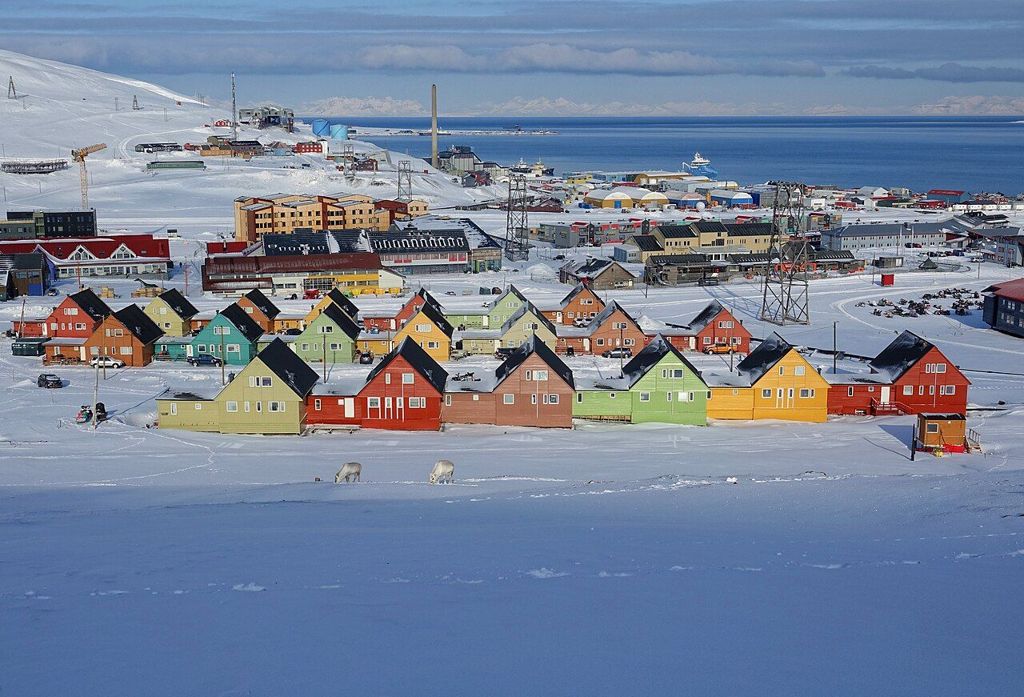
Outside the settlements, polar bears may be met anywhere, at any time of year, and people moving outside town are required to have suitable means of scaring off bears; in practice, guides carry firearms and flare guns. Signs at the edge of town make the point clearly. Do not walk beyond the town without a qualified guide.
Longyearbyen grew up as a coal-mining town, and old mining structures still stand on the slopes above it. A day or two here before or after a voyage gives time to adjust, see the museum and take guided walks or boat trips close to town.
Ship-based trips in general
Expedition ships and smaller boats sail from Longyearbyen through the summer, typically for a week or more. They follow the coasts of Spitsbergen and the islands to the north and east, looking for bears along the shore and at the edge of the pack ice. Days include landings by small boat, cruising along glacier fronts and long hours of searching from the deck.
Seeing a bear is likely on most summer voyages but never certain. A bear may be a distant white dot on a far shore, or, with luck, a close view from a ship lying quietly at the ice edge. Expect a lot of scanning, and bring good binoculars.
Another wild place: The Galapagos Islands
The pack ice
The pack ice is where many bears spend the summer. North and east of Svalbard, broken floes drift with wind and current, and bears walk and swim between them, hunting seals that rest on the ice. Ships carefully nose into the edge of the pack, and the sound of ice scraping along the hull is a constant.
How far the ice reaches varies from year to year and has, in general, been shrinking as the Arctic warms. Less summer ice makes hunting harder for bears in some areas, and that is part of the story you will hear on any voyage.
Summer light
From about late April to late August, the sun does not set in Svalbard. That endless light shapes a summer trip: wildlife viewing can happen at any hour, and ships may change course at midnight if a bear is seen. An eye mask helps with sleep. The light is often soft and low, which makes for beautiful photography, even when the weather turns grey and foggy, as it often does.
Besides bears, look for walruses hauled out on beaches, Svalbard reindeer, Arctic foxes, and huge colonies of seabirds on the cliffs. Whales, seals and the glaciers themselves fill the rest of the days.
Weather rules everything. Fog can roll in within minutes and hide a coastline completely, and wind can make landings impossible. Expedition teams adapt the plan daily, and a flexible attitude is the most useful thing you can bring aboard.
Why bears are watched from a distance
Polar bears are large predators, and an encounter on land can be dangerous for people and fatal for the bear, which may be shot in self-defence. Bears also need to save energy, and disturbing one, chasing it off a seal kill or forcing it to swim or run, harms it. Norwegian rules prohibit luring, feeding, chasing or disturbing bears, and set minimum distances that apply to ships, boats and people; guidelines tighten during the spring breeding period.
- Watch from the ship or a small boat, not on foot.
- Follow the expedition staff's instructions immediately.
- Keep voices low and avoid sudden movement on deck.
- Accept that a ship may withdraw from a bear that shows signs of disturbance.
The Governor of Svalbard enforces these rules, and they change from time to time, so read the current guidance before you travel.
What to pack
Summer temperatures hover not far above freezing, wind adds to the cold, and landings mean wet boots and spray. Bring warm, layered clothing, a windproof and waterproof outer layer, a hat and gloves, and sunglasses for the glare off ice and snow. A long camera lens helps, since you will usually be far from the animals. Spare batteries matter too, because cold drains them quickly on deck.
For a very different kind of wildlife voyage, the note on the Galapagos Islands covers a place where animals show little fear of people. The note on grey whales in Baja follows another species shaped by the Arctic, which feeds in northern waters and breeds far to the south.
Planning notes
- When: June to August
- Getting there: Fly to Longyearbyen via mainland Norway
- Bring: Warm layers, waterproofs, binoculars, eye mask, long lens